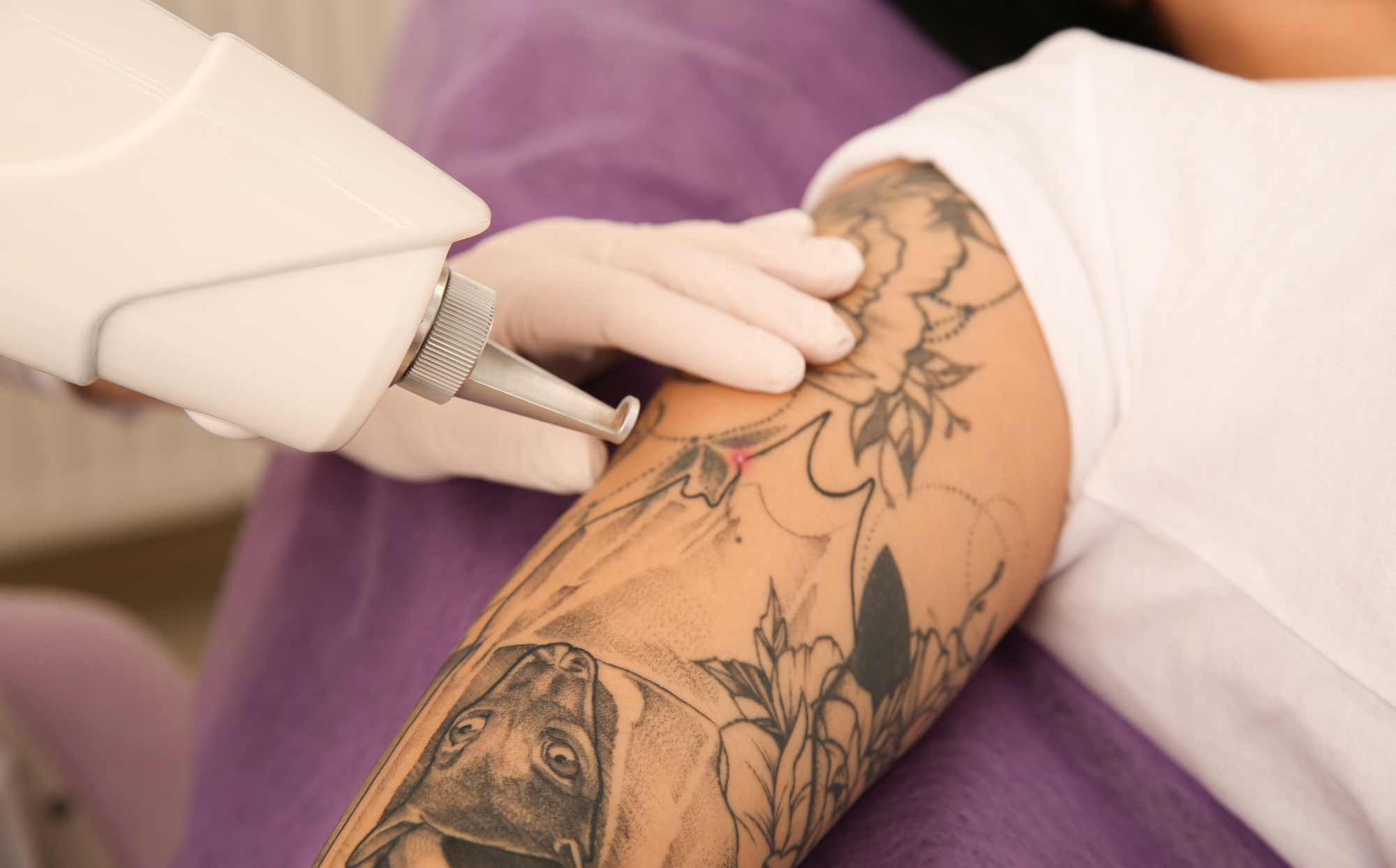
Laser tattoo removal typically hurts, but for most people it’s brief and very manageable with the right numbing options and aftercare. The experience is generally tolerable. While some discomfort is expected, intensity varies widely, and the sensation usually lasts seconds to minutes per session rather than hours.
At Bod Medical, laser tattoo removal is a common aesthetic treatment, and it’s normal to feel nervous about pain. The good news: understanding what it feels like, what affects pain levels, and how numbing works can make the entire experience far less intimidating.
Pain perception is personal, but laser tattoo removal is often described as a “quick, hot snap” on the skin. The intensity can range from mild to quite uncomfortable, depending on where the tattoo is, its size, the ink density, and your individual sensitivity.
Most patients feel a rapid series of pulses. Each pulse can feel like:
A hot pinch
A rubber-band snap
Tiny, fast “zaps” on the skin
Because the laser delivers energy quickly, the sensation is usually intense for a moment and then eases right away.
People commonly compare the feeling to:
Grease splatter or a quick burn-like sting
A sharp flick against sunburned skin
Repeated snaps in the same spot
It’s also common to notice heat during treatment, especially on darker or denser ink.
There isn’t one universally accepted “pain score” for everyone, but clinically and anecdotally, laser tattoo removal is often rated in the mid-to-high range compared to other non-surgical aesthetic treatments.
A practical way to think about it:
Small tattoos can feel like a quick annoyance (seconds).
Larger, darker tattoos can feel more intense because there are more pulses and more total time under the laser.
Pain during laser tattoo removal isn’t random. Certain factors reliably influence how intense it feels and how long the discomfort lingers.
The following areas tend to feel more sensitive:
Thinner skin
More nerve endings
Less fat padding
Areas where skin sits tightly over bone can also feel sharper because there’s less cushion.
While everyone’s experience differs, common patterns include:
Often more painful:
Ribs and sternum area
Hands and fingers
Feet and ankles
Inner arm and wrist
Neck and collarbone area
Often less painful:
Upper arm (outer)
Thigh (outer)
Calf (some people find this moderate)
Upper back/shoulder blade area (varies with ink density)
The same laser settings can feel very different depending on the location. If you have multiple tattoos in different spots, it’s normal to find one “easy” and another surprisingly uncomfortable.
Two people can treat the same tattoo and report completely different pain levels. Pain tolerance can be influenced by:
Sleep quality
Stress levels
Anxiety (anticipation can heighten pain)
Caffeine intake
Menstrual cycle/hormonal changes (for some patients)
This is why numbing and calming strategies can matter as much as the laser itself.
Tattoo age doesn’t always change the sensation of the laser, but it can affect:
Ink density and depth: Some older tattoos have already faded a bit.
How hard the laser has to work: Dense, saturated ink can require more energy or more sessions, which may increase discomfort over time.
Older tattoos may sometimes respond more readily than very new tattoos with heavily packed ink. Regardless, the feeling of each pulse is usually similar: quick, hot, and snappy.
Knowing the general flow of a session can reduce anxiety and help you prepare physically and mentally.
Laser tattoo removal works by delivering focused energy into the ink particles in the skin. That rapid energy delivery is what creates the snap/heat sensation.
Most discomfort occurs during the pulses and subsides quickly once the laser stops.
Small tattoos: often treated in a short time; the “hard part” may last seconds.
Medium/large tattoos: may take longer due to coverage area; discomfort can build as the skin becomes more sensitive.
Immediately after, it’s common to experience:
Redness and warmth
A stinging or burning sensation
Swelling (mild to moderate)
Sensitivity to touch
Some people describe the after-feel as similar to a fresh sunburn or windburn. The skin may feel tender for the rest of the day.
Laser tattoo removal is usually a series of sessions. Each session tends to be quick, but recovery and aftercare matter.
Realistic expectations around sensation include:
Expect discomfort, not a painless procedure.
Expect variability from session to session; sometimes the skin is more sensitive.
Expect that numbing can help, but it may not eliminate all sensation.
Pain control is a major part of a good patient experience. The right strategy depends on your tattoo’s location and size, your comfort level, and what’s medically appropriate for you.
Below are common options to reduce discomfort.
Topical numbing creams are a popular choice because they’re non-invasive and can reduce the sharpness of the pulses.
What to know:
They typically need time to work before treatment.
They may significantly reduce pain for some patients and moderately for others.
Effectiveness can vary based on skin thickness and treatment area.
Because numbing products vary, it’s important to follow guidance on what to use and how to apply it.
Cold is a simple, effective way to lower discomfort.
Ice can help by:
Temporarily numbing the surface
Reducing heat sensation
Calming post-treatment irritation
Some patients prefer a combination approach – cooling before, brief breaks with cooling during, and more cooling right after.
For patients who want stronger numbing, especially for sensitive areas, injectable lidocaine can be an option. Because it’s localized, it may provide greater comfort than topical numbing alone for certain tattoos.
This option is often considered when:
The tattoo is in a high-sensitivity area
The tattoo is larger or very dense
The patient has significant anxiety about pain
Whether injectable numbing is appropriate depends on individual factors and should be discussed during your visit.
Some people consider OTC pain relievers before or after treatment to reduce discomfort.
Important general guidance:
Not all OTC options are ideal before a procedure.
Because personal medical history matters, it’s smart to ask what’s appropriate for you rather than guessing.
Pain is not purely physical – anticipation and tension can amplify it.
Helpful techniques include:
Slow nasal breathing (in for 4, out for 6)
Unclenching shoulders and jaw during pulses
Focusing on a fixed point or using a mental “countdown”
Taking short breaks between sections for larger tattoos
If you arrive already stressed, your body may interpret the pulses as more painful. Calming your nervous system can make a noticeable difference.
Aftercare can influence how long discomfort lasts and how quickly the skin settles down. It also helps prevent unnecessary irritation.
Most people notice the strongest discomfort:
Immediately after treatment and through the first few hours
Then it typically improves over:
24-48 hours, with lingering tenderness possible depending on location and sensitivity
Some patients feel nearly normal by the next day. Others, especially those with larger tattoos or sensitive placements, may feel a bit sore or tender for a bit longer. Swelling can also make an area feel “achy” even when sharp pain is gone.
Some discomfort is normal, but pain that feels excessive or worsening can be a sign you should check in.
It’s reasonable to reach out if you notice:
Pain that intensifies significantly instead of improving
Increasing redness, warmth, or swelling after the initial period
Drainage or an odor
Fever or feeling unwell
If something feels “off,” it’s better to ask than to wait, especially because early guidance can prevent prolonged irritation.
Laser tattoo removal usually hurts, but the pain is typically brief, varies by body area and personal sensitivity, and can often be reduced with topical numbing, cooling, and other comfort strategies. With realistic expectations and good aftercare, most patients find the process very manageable from session to session.

About the Author
Dr. Bradley Bodner
March 31, 2026